
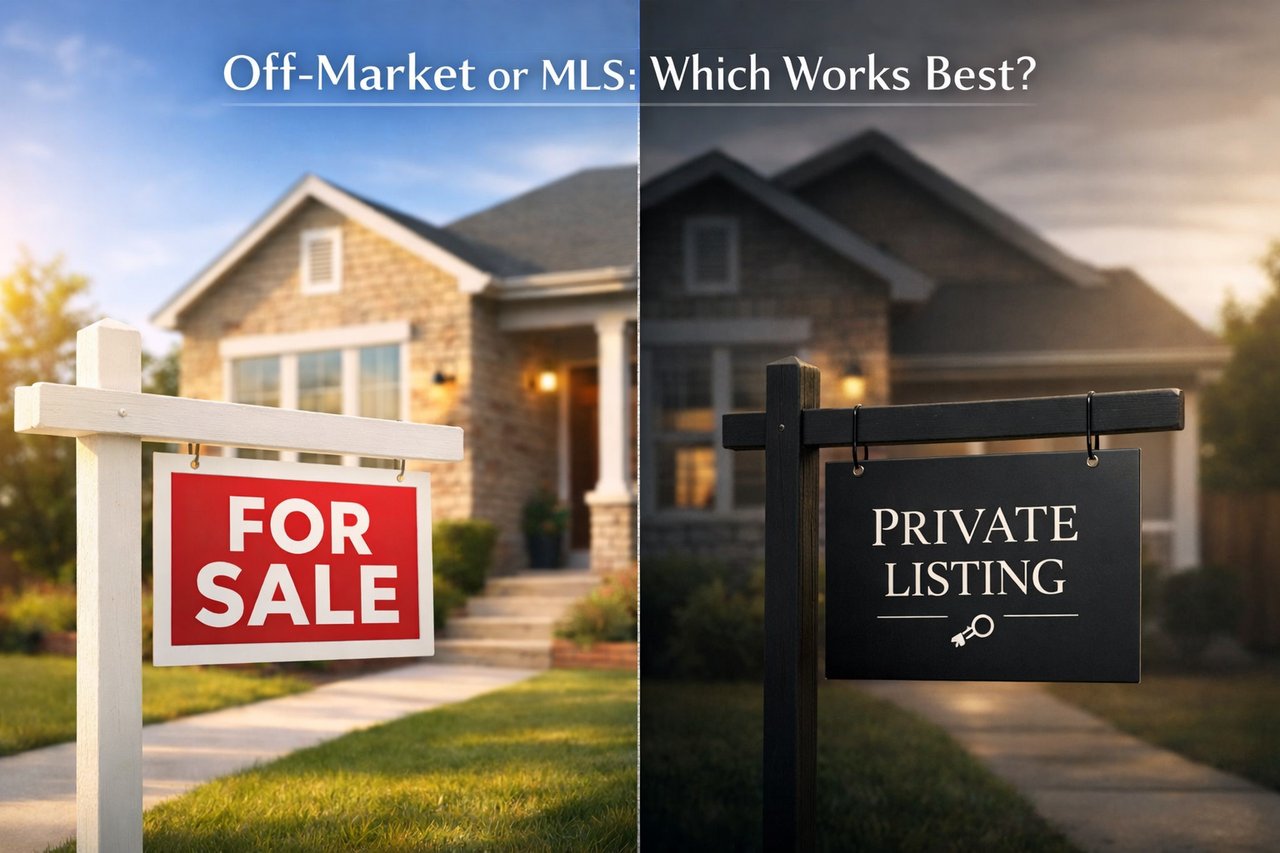
There’s a lot of buzz right now about off-market listings, private sales, and homes that never hit the MLS. Some brokerages market this as a premium strategy but the truth is, it isn’t always the best move for sellers.
For the vast majority of homes, full exposure through the MLS is the most effective way to sell. The more qualified buyers who see your home, the more likely you are to get the best price and terms.
There are situations where an off-market approach can make sense. The key is understanding when it helps and when it can hurt your sale.
What Does “Off-Market” Really Mean?
An off-market home is a property that is available for sale but not listed on the MLS. Because of that, it won’t appear across the major home search platforms where most buyers are actively looking, including Zillow, Realtor.com, and Redfin.
Instead, the property is shared privately through agent networks, direct outreach to buyers, or curated platforms within brokerages like mine. The goal is to reach qualified buyers while keeping the listing out of the broader public marketplace.
When Off-Market Can Make Sense
While it’s not my default strategy, off-market marketing can be helpful in certain situations:
1. Privacy Matters
Some sellers prefer to keep their home sale quiet. This can include public figures, professionals, or families who simply don’t want the listing widely advertised. Off-market marketing allows the home to be shared discreetly with vetted buyers.
2. Unique Luxury Properties
Certain high-end or architecturally distinct homes appeal to a smaller buyer pool. In these cases, it can make sense to market privately, targeting the right buyers through agent networks and professional circles, rather than relying on mass MLS exposure.
3. Testing Pricing or Strategy
Sometimes a seller and I don’t agree on price. Instead of debating theoretically, I recommend testing the home off-market—bringing a few qualified buyers through the home to see if the asking price resonates. Real feedback from the market often speaks louder than agent advice alone.
4. Buyer Considerations Around Property Taxes
In Texas, property taxes are always part of the equation. Because Texas is a non-disclosure state, sale prices aren’t public record like in many other states. However, county appraisal districts still assess market value for tax purposes.
Some buyers, especially in higher price ranges, prefer off-market transactions to keep sale prices quieter, avoiding highly visible benchmarks for themselves or the neighborhood. While this can make off-market sales appealing for certain buyers, sellers should still weigh the potential trade-off: less exposure can mean fewer offers.
Why MLS Exposure Still Wins
The MLS remains the most powerful tool for selling a home. When a property is listed there, it reaches thousands of active agents and buyers, major search platforms, and out-of-town buyers. That exposure often leads to:
-
More offers
-
Stronger competition
-
Better contract terms
In most cases, more visibility equals a stronger result for the seller.
Bottom Line: Strategy Over Buzzwords
The trend of off-market listings is getting a lot of attention, but the right approach depends on your home and your goals. Sometimes privacy or a targeted launch makes sense, but most homes benefit from full market exposure through the MLS.
Every home and every seller is different. My job is to guide you toward the strategy that creates the best outcome, whether that means a quiet off-market approach or a public listing designed to maximize competition and value.
